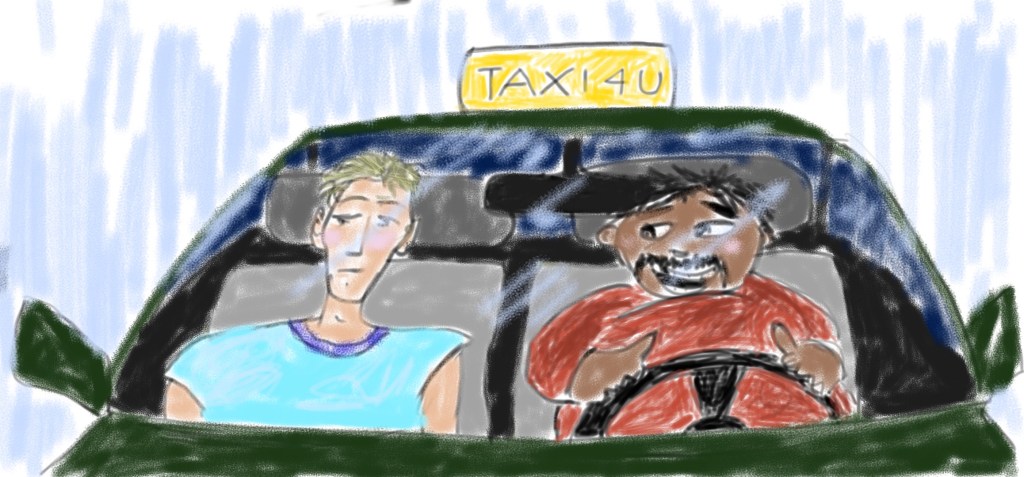
Last week, I arrived in Máncora, northern Peru. Getting here was quite the journey—over 9.5 hours across this long, narrow country. Máncora sits on the northwest coast. I thought it would be the perfect place to spend my last month in Peru. Here, I can kiss the sun and get some salt on my body. It’s winter here now. And although I love the Cuzco region, the cold has become a constant part of life there.
Still, when I first set out for Máncora, I questioned my decision. “Did I really want to travel north?” But I had already bought the plane ticket, so there was no turning back. The day came. I was supposed to fly from Cuzco to Talara, the nearest airport to Máncora. But my flight to Lima was delayed by 40 minutes. That left me with only 15 minutes to catch my connecting flight.
“What if I don’t make it?” That thought made my feet run like never before—and I made it! I arrived in Talara at 7 p.m., greeted by a warm evening breeze and a sea of taxi drivers competing for passengers.
Máncora was just a 90-minute drive away. The plan was to catch the last Eppo bus leaving at 8 p.m. I also knew a private taxi was a choice—but a pricey one: 120 soles!
“Taxi to the bus station, how much?” I asked in broken Spanish.
“20 soles. But the last bus to Máncora left at 7,” they told me.
“Is that true?” I wondered. “Or are they just trying to get me into their taxi?” I didn’t have much time if a bus really was leaving at 8. I had to decide, fast. Time or money? My budget, after two months on the road, was scraping bottom. I stood there in a nearly empty airport, night settling in, needing to make a quick choice.
“Madam, Máncora? 40 soles, madam!” a driver shouted.
“40 soles? Did I hear that right?”
“If it’s 40 soles to Máncora, and 20 just to the bus station, I’ll definitely take the taxi,” I thought. But my Spanish wasn’t good enough to say all that. I raised an eyebrow, repeated “40 soles?” and gestured my disbelief.
“Yes,” he nodded. “You’ll share the ride with him.” He pointed to a young man smoking with his back to us. “There will also be another person,” he added.
When the young man turned around and spoke, I instantly knew he was from Israel. Suddenly, politics filled the space between us. I forgot about the journey for a moment.
“Are you from Israel?” I asked.
“Yes. And you?”
“Iran. We’re enemies,” I said with a smile—half joking, half serious. Deep down, I sympathize with the Palestinians. I believe what’s happening to them is unbearably unfair. I also know I’m touching a hornet’s nest just by saying that. But I also believe life isn’t fair, and “justice” is just a human made word.
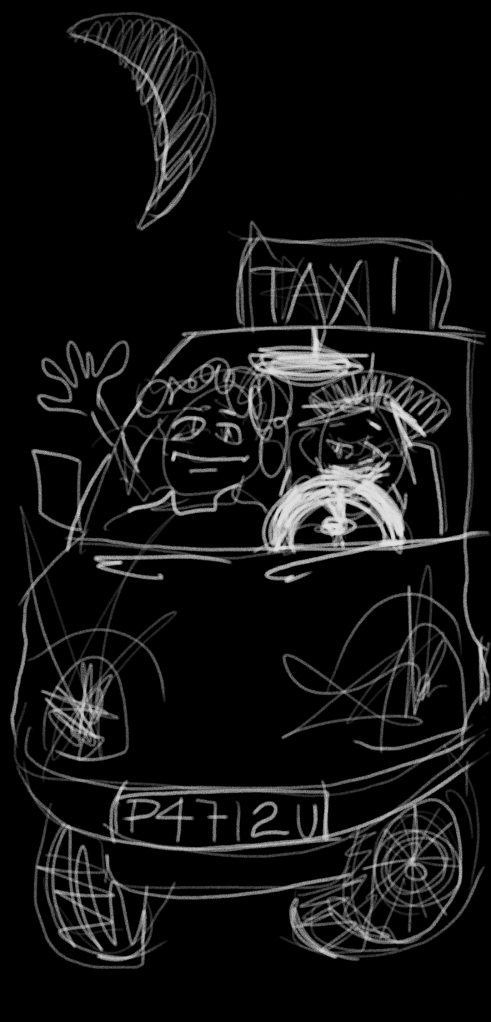
So I continued: “Should we just take this taxi together? It is more than 40 each since it’s just the two of us.” The airport was almost deserted. I was eager to get out of that unfamiliar place.
We agreed on a price. The driver blasted 80s music as we drove into the dark.
“Does he have to play music so loudly?” I thought. I considered asking him to turn it down—but instead, I turned to the Israeli man beside me and asked:
“What do you think about what’s happening between Palestinians and Israelis?”
I knew what I thought. And I knew his answer could build a wall between us for the rest of the ride. The last time I asked this question, the conversation ended badly. But it was already out of my mouth.
“Absolutely horrible! Both sides are equally crazy. My generation grew up under a right-wing government. We’re brainwashed. It was different in my parents’ time.”
“Oh… what do your parents think?”
“They didn’t like it. So they moved to the United States.”
“Why didn’t you go with them?”
“I was 18. I had to serve in the military first. If they’d left when I was 15, I could have gone with them.”
“So now you’re traveling after your service?”
“Yes,” he said. I remembered how, in my early 20s, I saw many young Israelis traveling through India after the army. They often traveled in groups, something encouraged by their authorities.
I also remembered signs at restaurants and hotels: “Israelis not welcome.” When I asked why, locals told me Israelis were arrogant and rude.
But this man was different. He was traveling alone. He would meet friends in Máncora, then go to Ecuador and Colombia. Just two months remained of his ten-month journey.
“ May I ask, how was the military like? What did you do?” I wanted to know.
“Terrible. But I had no choice. I was a security guard. My father was traumatized during his service. If you have family trauma, you can avoid the front line. But we all still have to serve. The military is sacred in Israel. Today, you can refuse, but it’s not easy. People judge you. When Israelis meet, the first question is always: ‘What was your service?’”
“At least you didn’t have to kill anyone,” I said. “And after traveling?”
“I’ll work. Maybe in the U.S.”
“How’s Iran?” he asked.
“Hell,” I replied. “The mullahs are as crazy as your leaders. I haven’t been back since 1993. That trip made it clear the Iranian chapter of my life was over.” I paused, then told him what I’d heard about the Green Movement.
“After the protests, young people were taken onto buses. The buses were driven into the desert and set on fire. That’s how they deal with dissent—in the name of God.”
“How old were you during the revolution? Are you Muslim?” he asked.
“I was seven. I was born in a Muslim country, but I don’t believe in organized religion. To me, religion is love. But the way patriarchies interpret Islam, Christianity, and Judaism—it’s about power, not love.”
“Where in Israel do you live?”
“Tel Aviv. It’s a cool city. Something for everyone.”
“How many people?”
“About half a million.”
“I wish I could visit Jerusalem,” I said. “But because I was born in Iran, I probably wouldn’t be allowed in.”
“Jerusalem? I don’t like it. Yes, it’s historic—but it’s full of extremists. It’s not safe. And I can’t visit Iran either.”
“No. But we had many Jews in Iran before. They left after the revolution.”
“My grandmother was an Iraqi Jew. She had to flee Iraq.”
“Think of Andalucía, when the Moors ruled,” I said. “Muslims, Jews, and Christians lived side by side. Art, science, and culture thrived. But today? Politicians divide us. They feed on hatred and fear.”
“Can I write about this in a blog post?” I asked.
“Sure. I’ll never read it anyway,” he replied.
“I’m glad I met you,” I said. “You give me hope for the future.”
And I meant it.
I’m grateful for the serendipity that put us in the same taxi.
For the challenge to my own prejudices.
For being reminded that people can surprise me.
And for this world—it’s so much more colorful than we think.
It’s not black and white.
PS: To the best of my ability, I’ve tried to recount our conversation. But what I’ve written has passed through the filter of my perception.
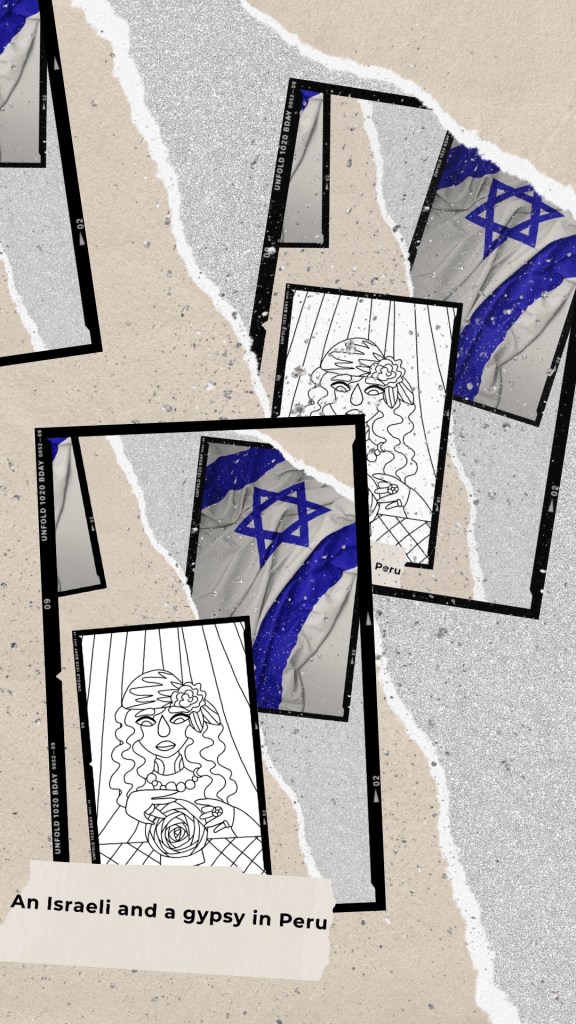
By the way, I am the gypsy.
Thanks for stopping by and checking out this post! If you haven’t already, be sure to hit subscribe to stay updated whenever I share something new. While you’re here, take a moment to explore the Wise and Shine Zine blogger community—it’s full of inspiration. You can also find me on Instagram for more updates and behind-the-scenes moments. Looking for tunes or movement inspiration? Head over to my Spotify—just search for Movement Coach Parisa and let the playlist fuel your day!
Make a one-time donation
Make a monthly donation
Make a yearly donation
Choose an amount
Or enter a custom amount
Your contribution is appreciated.
Your contribution is appreciated.
Your contribution is appreciated.
 People, Life, Politics And Bullshit
Very serendipitous indeed 🙂 ~ I’m glad you two got to meet one another and chat.
~David
LikeLiked by 1 person
😁😎Me too😉
LikeLiked by 1 person
BTW, I don’t know this for a fact, but I would be surprised if you’re not allowed to enter Israel due to being from Iran. I’ve never ever heard of such a thing.
LikeLiked by 1 person
I have Iranian friend who have had trouble. That is why I mentioned it there. But Maybe it depends on who you meet there when you arrive?!
LikeLiked by 1 person
I found this link:
https://www.tripadvisor.com/ShowTopic-g293977-i1733-k11929712-Visiting_Israel_with_American_passport_for_Iranians-Israel.html
LikeLiked by 1 person
🙏It is crazy how Politics and politicians with their power and decisions divide humanity.
LikeLiked by 1 person
😢
LikeLiked by 1 person
When people say “life is unfair” it is usually a cop out. Life is neither fair nor unfair. Only people can be fair, and only people can be be unfair.
LikeLiked by 1 person
It is sooo true John. Very well Said ☺️
LikeLiked by 1 person